

Usko grlo
Kupili ste petu mašinu, a učinak se nije pomerio za jedan komad
Najsporije mesto određuje koliko linija isporučuje. Pre nove opreme treba naći mašinu ili korak koji postavlja vaš broj.

Kupili ste petu mašinu i izlaz vam se nije pomerio ni za jedan komad. Tri mašine rade 30 komada na sat, jedna radi 20. Linija isporučuje 20. Najsporije mesto određuje broj, a ništa ispred njega ga ne menja.
Zašto peta mašina ne povećava izlaz
Sve što dodate ispred uskog grla pretvara se u gomilu nedovršenih komada. Sve iza njega čeka. To je novac koji stoji na podu: materijal, rad i prostor koji su već plaćeni, a ne donose ništa dok komadi čekaju.
Kako se usko grlo vidi u pogonu
Najveća gomila nedovršenog posla stoji ispred uskog grla. Mašina iza njega često čeka materijal. Operater na tom mestu stalno nekoga traži, a svaki prekid na njemu zaustavlja celu liniju. Teorija ograničenja, koju je Goldrat opisao u knjizi Cilj, govori o istom još od osamdesetih godina. I dalje srećem firme koje prvo kupe mašinu, pa tek onda provere šta koči proizvodnju.
Šta to jedno mesto gubi svake smene
Pre nego što potpišete ugovor za novu opremu, nađite najveću gomilu nedovršenog posla i pogledajte šta stoji ispred nje. Zatim izbrojte šta to mesto gubi svake smene na pripremi i promeni serije, na materijalu koji nedostaje i na operateru koga su pozvali na drugi posao. Ako se na tom mestu izgubi 10 komada na sat, a marža je 60 evra po komadu, svaki takav sat košta 600 evra. Većina pogona na tom mestu nađe dva takva sata po smeni, a njihovo vraćanje ne košta ništa.
Usko grlo postoji i van fabrike
U uslužnoj firmi to je jedan čovek na koga čeka svaki predmet. U kancelariji je to odobrenje sa pet potpisa koje stvarno čita samo jedna osoba.
Kako rešavam ovaj problem
Prvo merenjem nalazim stvarno usko grlo: gde je gomila, koliko komada na sat prolazi kroz svaku operaciju i gde se gube sati. Zatim iz tog mesta izvlačim sve što može da se izvuče pre nego što se potroši i jedan evro: priprema se radi dok mašina radi, materijal stiže pre nego što zatreba, operater ostaje na svom mestu. Na kraju postavljam dnevnu i nedeljnu kontrolu, jer se usko grlo seli čim se jedno reši, pa ga treba uhvatiti kada pređe na drugo mesto.
Za to sam napravio sistem Usko grlo: priručnik, procenu sa 45 pitanja, mapu uskog grla i dnevne i nedeljne kontrolne listove.
Sutra ujutru, da li biste znali koja mašina određuje vaš broj?
Pre nego što kupite sledeću mašinu, izmerite gde se proizvodnja zaista zaustavlja. Sistem Usko grlo pokazuje kako da nađete svoje usko grlo, izvučete iz njega sve pre ulaganja i uhvatite ga kada se pomeri.
Bottleneck
You bought a fifth machine and your output did not move by a single piece
The slowest point sets what the line ships. Before buying new equipment, find the machine or step that sets your number.
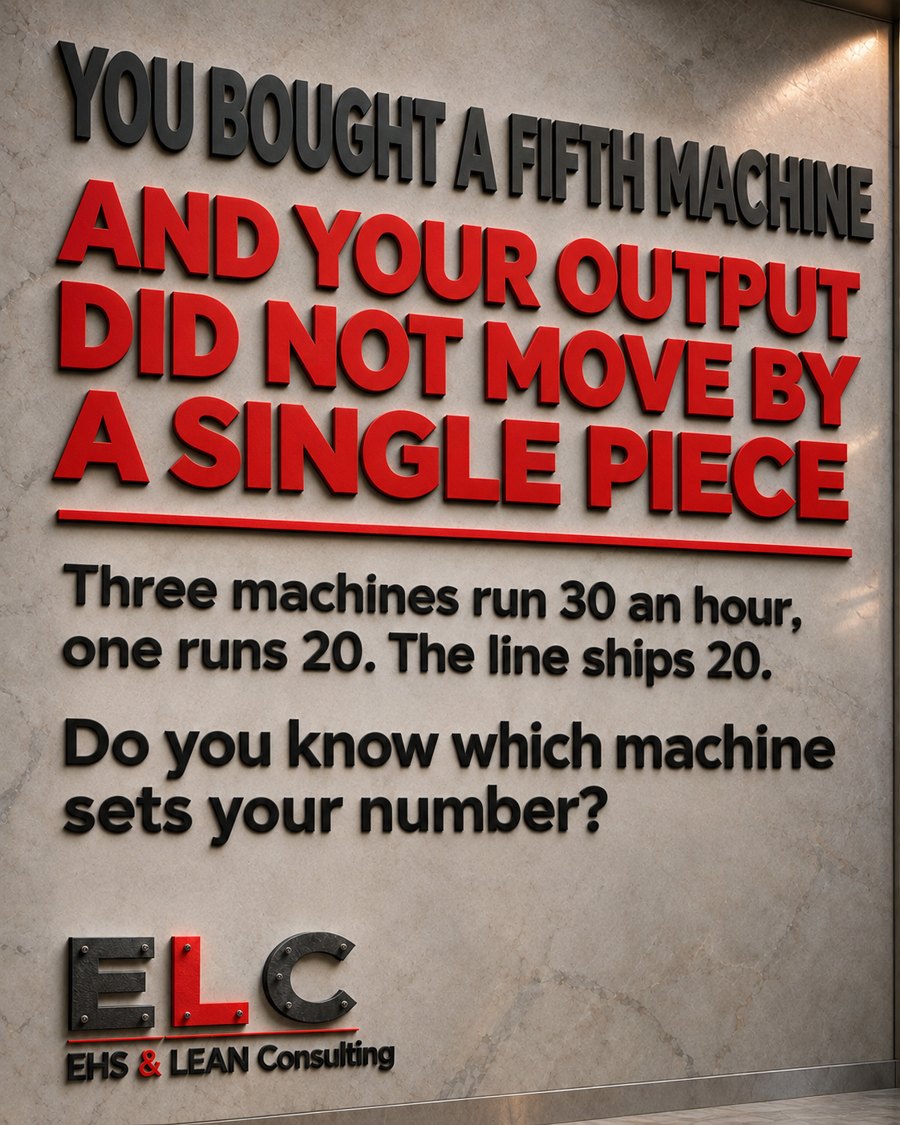
You bought a fifth machine and your output did not move by a single piece. Three machines run 30 an hour, one runs 20. The line ships 20. The slowest point sets the number, and nothing upstream changes it.
Why the fifth machine does not raise output
Everything you add in front of the bottleneck becomes a pile of unfinished work. Everything behind it waits. That is cash sitting on your floor: material, labor and space you have already paid for, earning nothing while the parts wait.
How a bottleneck shows up on the floor
The biggest pile of unfinished work stands in front of the bottleneck. The machine behind it often waits for material. The operator at that spot is constantly looking for someone, and every interruption there stops the whole line. The Theory of Constraints, described by Goldratt in The Goal, has been saying the same thing since the 1980s. I still meet companies that buy a machine first and only then check what is holding production back.
What that one spot loses every shift
Before you sign for anything new, find the biggest pile of unfinished work and look at what stands in front of it. Then count what that spot loses every shift on setups, on missing material and on an operator who got pulled somewhere else. If you lose 10 pieces an hour there at 60 dollars of margin per piece, every such hour costs you 600 dollars. Most plants find two of those hours a shift, and they cost nothing to get back.
The bottleneck exists outside the factory too
In a service company it is the one person every file waits on. In an office it is the approval with five signatures that only one person actually reads.
How I solve this problem
First I find the real bottleneck by measuring: where the pile is, how many pieces an hour go through each operation and where the hours are lost. Then I get everything out of that spot before a single dollar is spent: setup is done while the machine runs, material arrives before it is needed, the operator stays at the station. Finally I set up daily and weekly control, because the bottleneck moves as soon as one is fixed, and it has to be caught when it shifts to another spot.
For this I built the Bottleneck system: a manual, a 45 question assessment, a bottleneck map and daily and weekly control sheets.
Tomorrow morning, would you know which machine sets your number?
Before you buy the next machine, measure where production really stops. The Bottleneck system shows how to find yours, get everything out of it before you invest, and catch it when it moves.