

Norma i učinak
Vaš radnik može da napravi 60 komada. Zašto staje na 50?
Radnik koji može više radi onoliko koliko mu je bezbedno. Kako se meri norma koja je stvarna.

Tejlor je namerno ograničavanje učinka pre više od 100 godina opisao kao „sistematsko izbegavanje rada“ (systematic soldiering). Isto se danas vidi u svakoj smeni, u proizvodnji i u uslužnim firmama: radnik koji može više radi tačno onoliko koliko mu je bezbedno.
Zašto radnik koji može 60 staje na 50
Ljudi uče iz onoga što se desi kada napravite više. Ako 60 danas sutra postane nova norma, bez priznanja i bez nagrade, 50 počinje da ima smisla. Najbolji radnik to zna prvi, jer je to već video. Kada uči novog kolegu, prenosi mu i tempo koji je u toj smeni siguran. Taj broj nigde nije napisan: nije u radnom uputstvu, nije u izveštaju, ne vodi ga nijedan sistem. Godinama se prenosi sa smene na smenu.
Kako se to vidi u pogonu
- Svi na istoj operaciji prave skoro isti broj komada, bez obzira na iskustvo.
- Radnik pokaže 60 kada nema nikoga u blizini, a u izveštaju smene stoji 50.
- Novi radnik prvo nauči koliko se radi, a tek posle kako se radi.
- Norma u evidenciji ne odgovara onome što smena stvarno ostvaruje, a niko ne zna ko ju je postavio.
Šta firma plaća zbog toga
Firma plaća skriveni kapacitet koji nijedan plan proizvodnje ne vidi i rokove isporuke izračunate na broju koji niko ne prelazi. Razlika između 50 i 60 komada je 20 odsto više učinka sa istim ljudima i istom mašinom, u svakoj smeni.
Kako rešavam ovaj problem
Normu ne postavljam stojeći iza leđa radnika sa štopericom. Počinjem razgovorom sa operaterom: šta radi, gde gubi vreme, šta mu smeta. Zatim merim ceo ciklus, ocenjujem tempo, dodajem dodatke za lične potrebe, zamor i uslove rada i odvajam ono što pripada standardnom vremenu od gubitaka koji se rešavaju posebno, kao što su zastoji i čekanje materijala. Takva norma je stvarna i može da se odbrani pred svakim u prostoriji. Gde je moguće, veći učinak se priznaje kroz varijabilni deo zarade. Ovaj postupak sam primenjivao u prehrambenoj, tekstilnoj, hemijskoj, građevinskoj, elektro i odbrambenoj industriji.
Probajte ovu nedelju
Pitajte novog radnika ko mu je pokazao posao i koliko komada misli da se od njega očekuje. Zatim pitajte najiskusnijeg radnika koliko komada može da napravi bez žurbe. Razlika između ta dva broja je skriveni kapacitet vašeg pogona.
Šta bi se desilo u vašoj firmi da novi radnik prvog dana napravi 60?
Norme koje niko nije proverio vode do pogrešnog plana proizvodnje i nepravične zarade. Standardno vreme izmereno u pogonu, uz razgovor sa operaterom, daje osnovu za plan proizvodnje, proračun kapaciteta i realan rok isporuke.
Standards and output
Your operator can make 60. So why does he stop at 50?
An operator who can do more works at the pace that feels safe. How to measure a standard that is real.
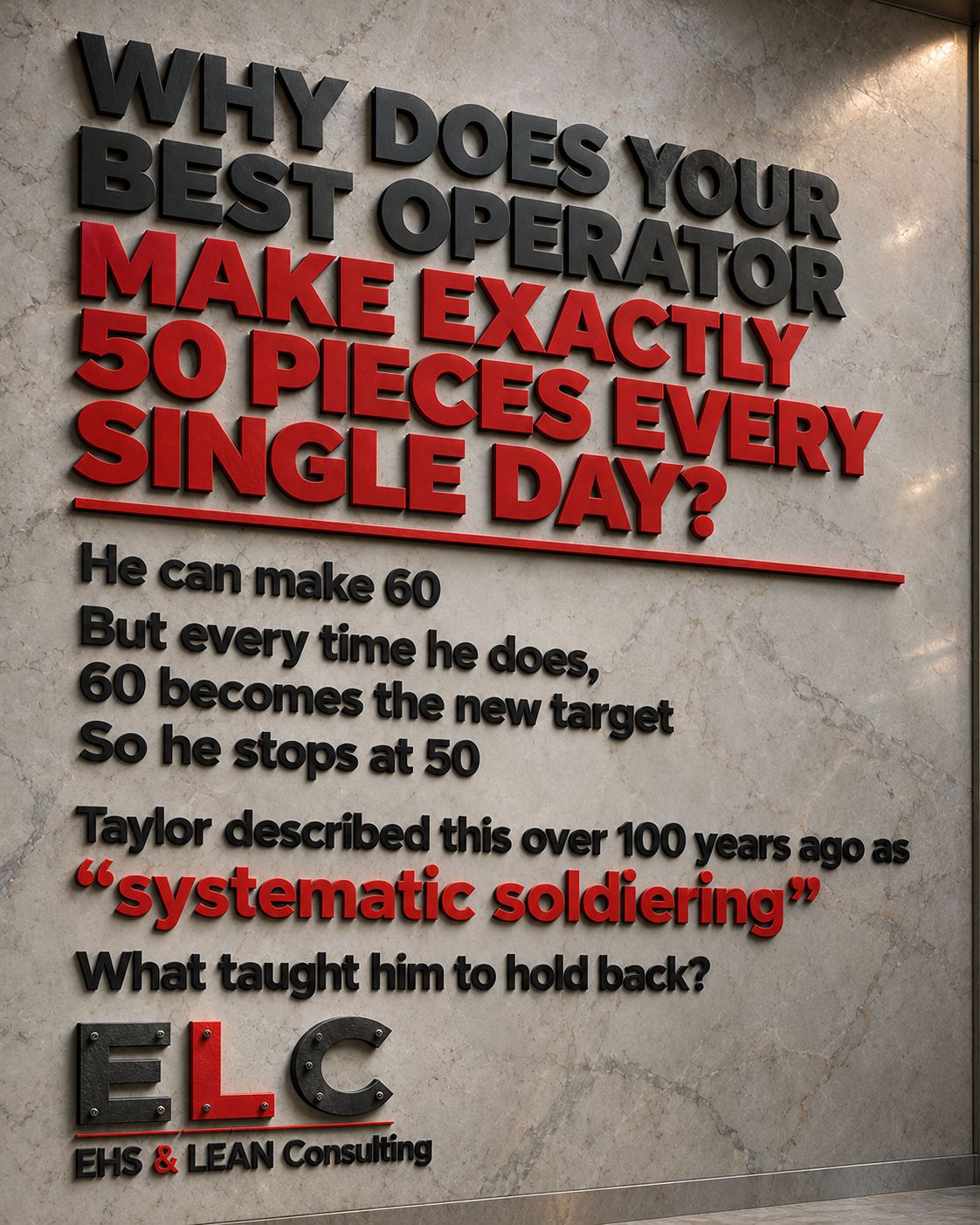
Taylor described deliberate restriction of output more than 100 years ago as “systematic soldiering”. The same thing happens in every shift today, in manufacturing and in service companies: an operator who can do more works at exactly the pace that feels safe.
Why an operator who can make 60 stops at 50
People learn from what happens when they produce more. If 60 today becomes the new target tomorrow, with no recognition and no reward, 50 starts to make sense. The best operator already knows this, because he has seen it happen. When he trains a new colleague, he passes on the pace that is safe on that shift. That number is written nowhere: not in the work instruction, not in the report, not in any system. It travels from shift to shift for years.
What it looks like on the shop floor
- Everyone on the same operation makes almost the same number of pieces, regardless of experience.
- An operator shows 60 when nobody is watching, while the shift report says 50.
- A new hire learns how many to make before learning how to make them.
- The standard in the records does not match what the shift actually achieves, and nobody knows who set it.
What the company pays for it
The company pays for hidden capacity that no production plan can see, and for delivery dates calculated on a number nobody exceeds. The gap between 50 and 60 pieces is 20 percent more output from the same people and the same machine, every shift.
How I solve this problem
I do not set a standard standing behind an operator with a stopwatch. I start with a conversation with the operator: what the job involves, where time is lost, what gets in the way. Then I measure the full cycle, rate the pace, add allowances for personal needs, fatigue and working conditions, and separate what belongs in standard time from losses that are handled separately, such as breakdowns and waiting for material. A standard built this way is real and can be defended in front of anyone in the room. Where possible, higher output is recognised through the variable part of pay. I have used this approach in food, textile, chemical, construction, electrical and defence plants.
Try this week
Ask a new hire who showed him the job and how many pieces he thinks are expected of him. Then ask your most experienced operator how many he can make without rushing. The gap between those two numbers is the hidden capacity of your plant.
What would happen in your plant if a new hire made 60 on day one?
Standards nobody has checked lead to wrong production plans and unfair pay. A standard time measured on the shop floor, starting with a conversation with the operator, gives you a base for production planning, capacity calculation and realistic delivery dates.